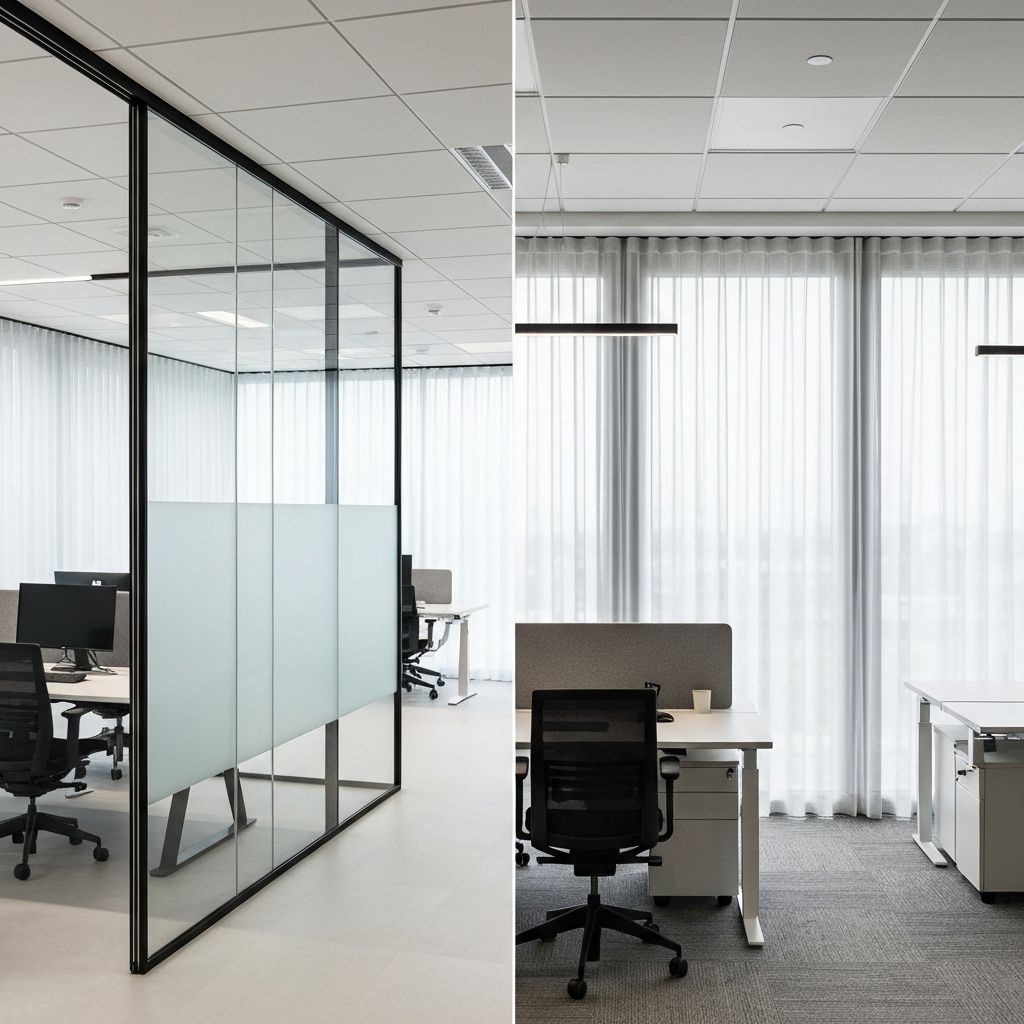
When it comes to privacy in buildings, there are several established options: blinds, curtains, frosted glass, and more recently, switchable Smart Film. Each solution has its own characteristics, advantages, and limitations. This guide provides an objective comparison to help you determine which approach is most suitable for your specific project.
The right choice depends on your priorities—whether that is flexibility, aesthetics, budget, or long-term value. Smart Film is not always the best option, and traditional solutions are not inherently inferior. The goal is to match the solution to the requirements.
Traditional Privacy Solutions
Before exploring Smart Film, it is worth understanding the traditional options that have been used for decades.
Blinds
Horizontal or vertical slats that can be tilted or raised to control light and privacy.
Advantages
- Affordable initial cost
- Widely available
- Easy to replace
Limitations
- •Requires manual adjustment
- •Accumulates dust
- •Can obstruct views when partially closed
Curtains
Fabric panels hung from rods that can be drawn to cover windows and glass surfaces.
Advantages
- Low cost
- Many design options
- Easy installation
Limitations
- •Takes up space when open
- •Requires regular cleaning
- •Limited to window applications
Frosted Glass
Permanently etched or coated glass that diffuses light while blocking visibility.
Advantages
- No moving parts
- Low maintenance
- One-time installation
Limitations
- •No flexibility—always opaque
- •Reduces natural light permanently
- •Cannot switch to clear
Smart Film as a Modern Alternative
Smart Film uses PDLC (Polymer Dispersed Liquid Crystal) technology to create switchable privacy glass. When powered on, the film becomes transparent. When powered off, it turns opaque white, blocking visibility while allowing diffused light through.
This technology can be applied to existing glass (retrofit) or laminated into new glass panels during manufacturing. The key advantage is flexibility—the ability to switch between states instantly, controlled by a switch, remote, smartphone, or building automation system.
Key Difference
Unlike traditional solutions that are either permanently fixed or require manual adjustment, Smart Film provides instant, electronic control over privacy without physical barriers or moving parts.
Key Differences
The following comparison highlights the main differences between Smart Film and traditional privacy solutions across key factors.
Privacy Control
Smart Film
Instant switching between clear and opaque with a switch, remote, or automation
Traditional Solutions
Manual adjustment required (blinds/curtains) or permanently fixed (frosted glass)
Flexibility
Smart Film
Full control over transparency—clear when needed, private when desired
Traditional Solutions
Limited or no flexibility once installed
Aesthetics
Smart Film
Clean, minimal appearance that preserves the glass surface and modern design
Traditional Solutions
Blinds and curtains add visual elements; frosted glass reduces clarity
Installation
Smart Film
Professional installation required; electrical connection needed
Traditional Solutions
Simple DIY or basic installation; no electrical work required
Maintenance
Smart Film
Low maintenance—clean like regular glass, no moving parts to wear
Traditional Solutions
Blinds collect dust; curtains require washing; frosted glass needs cleaning
Cost
Smart Film
Higher upfront investment; long-term value through durability and flexibility
Traditional Solutions
Lower initial cost; may require replacement over time
When Traditional Solutions Make Sense
Traditional privacy solutions remain practical and sensible for many situations. Being honest about this helps you make a better decision.
Budget-Constrained Projects
When cost is the primary concern and flexibility is not required.
Simple Privacy Needs
Spaces where privacy is needed occasionally and manual adjustment is acceptable.
Temporary Installations
Rental properties or temporary spaces where permanent investment is not justified.
Non-Design-Focused Environments
Functional spaces where aesthetics are secondary to practicality.
When Smart Film Is the Better Choice
Smart Film offers distinct advantages in specific contexts where flexibility, aesthetics, and modern functionality are priorities.
Modern Offices & Meeting Rooms
Where frequent privacy switching, clean aesthetics, and professional appearance matter.
High-End Residential Spaces
Bathrooms, bedrooms, and living areas where design and functionality are equally important.
Commercial & Retail Environments
Storefronts, consultation rooms, and spaces requiring visual flexibility without physical barriers.
Design-Focused Projects
Any space where minimalist aesthetics and modern technology are valued.
Long-Term Perspective
When evaluating privacy solutions, it is important to consider the long-term implications beyond the initial purchase and installation.
| Factor | Smart Film | Traditional |
|---|---|---|
| Lifespan | 10+ years with proper care | Varies; blinds/curtains may need replacement |
| Maintenance | Minimal—clean like glass | Regular cleaning; potential repairs |
| Design Relevance | Modern, timeless aesthetic | May look dated over time |
| User Experience | Effortless instant control | Manual operation required |
| Property Value | Premium feature addition | Standard expectation |
Choosing the Right Solution
The right privacy solution depends on your specific situation. Consider the following questions to guide your decision.
What is your project type?
Modern offices, high-end homes, and design-focused commercial spaces benefit most from Smart Film. Functional spaces with simple needs may be well-served by traditional solutions.
What is your budget?
Smart Film requires a higher upfront investment but offers long-term value. If budget is constrained, traditional solutions provide practical privacy at lower cost.
How important is flexibility?
If you need to switch between open and private configurations frequently, Smart Film provides unmatched convenience. If privacy needs are static, frosted glass may suffice.
What are your aesthetic expectations?
For clean, minimal, modern aesthetics, Smart Film preserves the glass surface without adding visual clutter. Traditional solutions add physical elements to the space.
Note: This comparison is provided for general guidance. The best solution depends on your specific project requirements, existing conditions, and priorities. For personalized recommendations,contact CYTINTfor a consultation.